
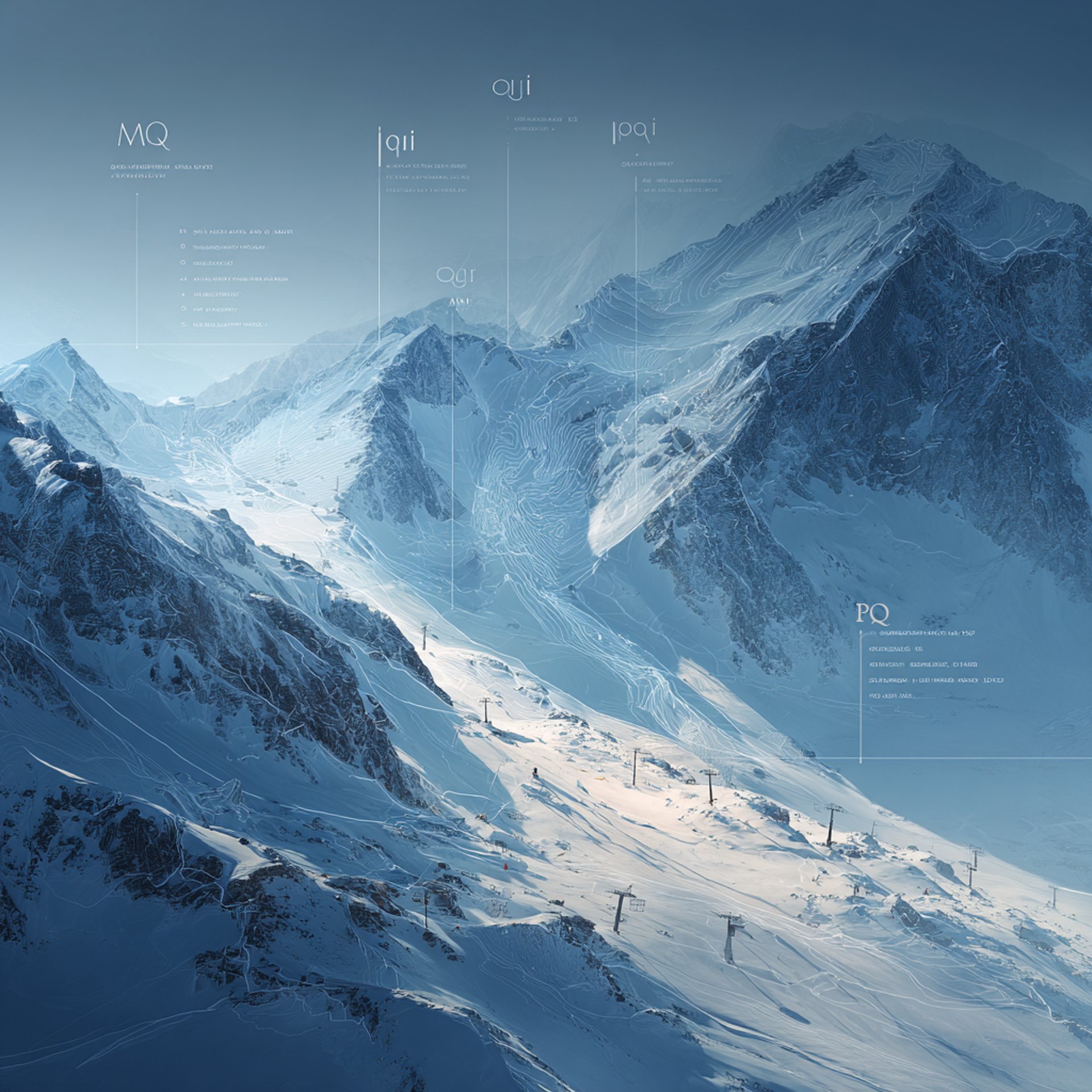
Alpine Intelligence
Applied intelligence for environments where experience, environmental variability, and capital investment converge.
10+
Dozens
Research to Application Frameworks
Applied Intelligence Domains
For alpine locations where performance, resilience, and long-term viability matter.
What Is Alpine Intelligence?
Forlytica Applied (FA) deploys Forlytica Research Group's intelligent research-grade inference frameworks to environments defined by experience, environmental variability, and systemic complexity.
Unlike traditional analytics—which often rely on lagging indicators, averages, or static benchmarks—Alpine Intelligence evaluates how places perform under changing conditions, and how those conditions shape user experience, operational resilience, and long-term value.
FA systems excel across natural and built environments, including mountain resorts, hospitality systems, tourism regions, and destination-scale infrastructure.
"The Greatest Snow on Earth?"
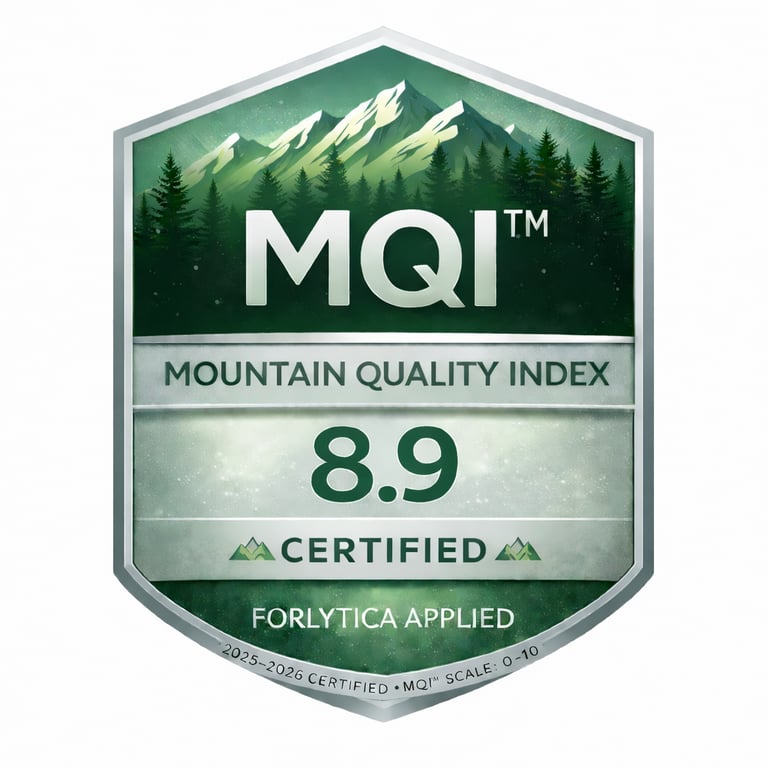
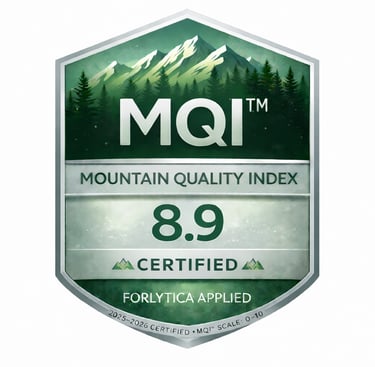
• Mountain Quality Index (MQI™) values—typically observed in the [MQI: X.X–X.X] range—driven by terrain continuity, lift-access efficiency, and moderated congestion effects.
A destination-level framework assessing terrain, access, continuity, and experiential flow.
MQI evaluates:
terrain diversity and connectivity
lift and access dynamics
congestion effects
experiential consistency across conditions
MQI clarifies how a mountain functions as a system, not just how it appears in marketing materials.


Case:
Why Traditional Metrics Fail at the Destination Level
Most alpine destination decisions rely on fragmented indicators:
historical visitation counts
seasonal averages
weather normals
isolated satisfaction surveys
revenue or occupancy snapshots
These measures describe what happened, not how resilient, adaptive, or stable a destination actually is as conditions shift.
As climate variability, capital intensity, and consumer expectations increase, destinations face growing exposure to misaligned investment, degraded experience, and structural fragility.
Forlytica's Alpine Intelligence exists to close that gap.
What Alpine Intelligence Evaluates
Alpine Intelligence assesses destinations across interdependent dimensions that traditional metrics treat separately:
Environmental performance under real variability
Experience quality as perceived, not assumed
Operational resilience across stress conditions
Capital sensitivity to environmental and experiential shifts
Long-horizon viability rather than short-term optimization
Alpine Intelligence is designed to inform executive-level tradeoffs—where operational strain, capital investment, and guest experience intersect.
The result is a structural view of how a destination actually functions—and where risk, opportunity, or instability concentrates.
Utah is one of the first destination environments where experiential claims can be evaluated under formal Alpine Intelligence frameworks developed by Forlytica Applied, rather than inferred from reputation or snowfall totals.
What matters about Utah is not the phrase “The Greatest Snow on Earth,” but whether underlying snow structure, terrain configuration, and access dynamics consistently preserve experience quality under real-world use.
Under Forlytica Applied’s Alpine Intelligence assessments, Utah emerges as an early reference environment because it demonstrates:
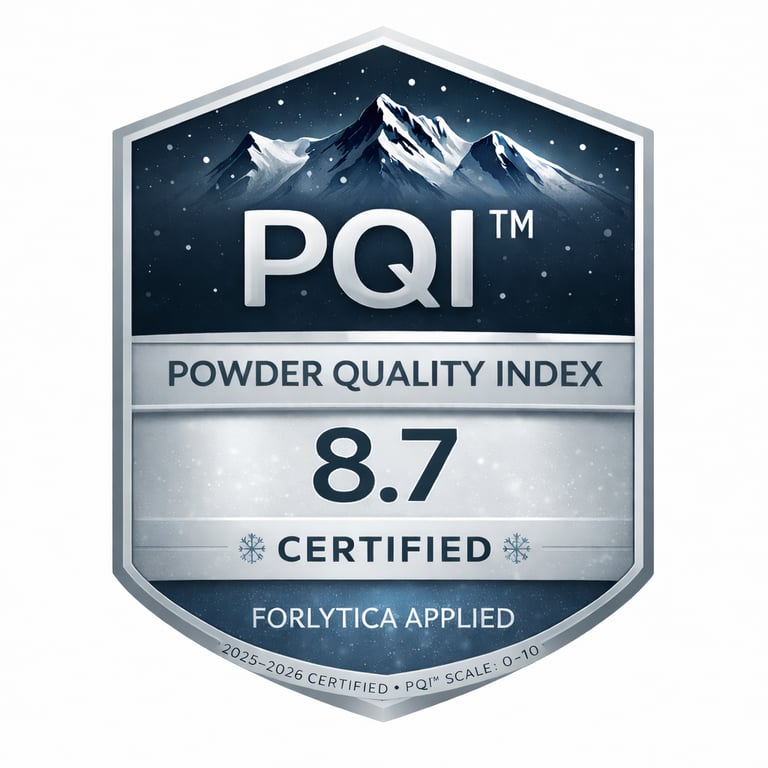
• Powder Quality Index (PQI™) values—typically observed in the [PQI: X.X–X.X] range—reflecting low-density snowfall, strong structural persistence, and slower post-storm degradation.
A formal standard evaluating snow quality as experienced, not merely accumulated.
PQI integrates:
meteorological conditions
snow structure and density characteristics
temperature and wind interactions
persistence and degradation dynamics
PQI allows ski resorts and winter hotel destinations to assess true on-snow experience, comparative positioning, and climate sensitivity beyond headline snowfall numbers.
• Alignment between environmental conditions and mountain structure, allowing experiential quality to remain coherent beyond peak snowfall windows
• Repeatability across seasons, making quality observable rather than episodic
Utah is not an isolated outlier. It is a baseline case that enables structural comparison with Colorado, California, Idaho, and other alpine destinations where similar snowfall totals mask materially different experience dynamics.
PQI™ and MQI™ are not ratings of “good” or “bad” alpine destinations, but indicators of how experience quality behaves under real-world conditions. To this point, Utah does not end the analysis. It makes comparative evaluation possible.
Together, PQI™ and MQI™ allow destination quality to be evaluated as an integrated system—where environmental conditions and mountain structure jointly determine experiential resilience.
View an illustrative PQI™ assessment for a Utah destination.
Destination-Level Resilience Assessment
Beyond individual indices, Alpine Intelligence evaluates system-wide resilience, including:
environmental volatility exposure
operational adaptability
experience degradation thresholds
investment fragility under change
This allows operators, owners, and stakeholders to understand where stability holds—and where it breaks.
Resilience
Beyond individual indices, Destination Intelligence evaluates system-wide resilience. Resilience is evaluated systemically, across environmental volatility, operational adaptability, experiential degradation thresholds, and capital fragility.
This allows operators, owners, and stakeholders to understand where stability holds—and where it breaks.
It's purpose is not to constrain decisions, but to reveal where flexibility exists—and where it does not.
Who Uses Destination Intelligence
Destination Intelligence is used where decisions are consequential, visible, and difficult to unwind:
Ski resort operators and owners
Hospitality and destination development groups
Tourism boards and regional authorities
Institutional investors evaluating destination assets
Infrastructure planners in climate-sensitive environments
Engagements are typically strategic, comparative, or forward-looking—not transactional.
How Institutions Engage
Alpine Intelligence engagements may include:
destination assessments and benchmarking
certification standards (PQI, MQI, and related indices)
resilience and scenario evaluations
comparative analyses across peer destinations
long-horizon risk and viability studies
Specific methodologies, datasets, and deployment architectures are governed by engagement-specific agreements.
Relationship to Forlytica Research Group™
Alpine Intelligence frameworks originate from foundational research conducted within the Forlytica Research Group, including work in:
evidence-weighted inference
environmental signal analysis
drift and stability modeling
high-dimensional system evaluation
Forlytica Applied is responsible for translating validated research into operational, institutional, and commercial implementations.
Integrity & Use Notice
Public materials on this page are descriptive of applied frameworks and engagement models.
They do not constitute investment, legal, medical, or regulatory advice.
All Alpine Intelligence frameworks adhere to evidence-weighted reasoning, transparent assumptions, and domain-appropriate validation standards.
A division of the Forlytica Research Group™
For foundational research briefs, scientific insights, and the core architecture behind applied intelligence, visit Forlytica.com.
IINSTITIUTIONAL ENGAGEMENTS & PARTNERSHIPS
© 2025. All rights reserved.
Explore Partnership or Licensing Opportunities
Forlytica Applied provides research-derived frameworks, diagnostics, and applied intelligence services for institutional and organizational use. Materials presented are descriptive of methodology and engagement models and are not intended to constitute investment, legal, medical, or regulatory advice.
Forlytica Applied is a division of the Forlytica Research Group, responsible for translating validated research frameworks into applied, institutional, and commercial implementations.
Forlytica Applied
United States